The Australian Synchrotron
A world-class national research facility that uses accelerator technology to produce a powerful source of light-X rays and infrared radiation a million times brighter than the sun.


Showing 1 - 20 of 76 results
A world-class national research facility that uses accelerator technology to produce a powerful source of light-X rays and infrared radiation a million times brighter than the sun.
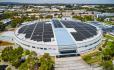
The Australian Synchrotron in Melbourne has a suite of X-ray and infrared beamlines with applications in health, medical, food, environment, nano-technology, energy, mining, advanced materials, agriculture and cultural heritage.

More than 3,200 solar panels have been installed across the rooftops of the Australian Nuclear Science and Technology Organisation’s (ANSTO) Australian Synchrotron in Clayton, offsetting enough power to light up the whole MCG for more than five years.

The Program Advisory Committees review proposals submitted to a particular beamline at the Australian Synchrotron
Consortium will map the 86 billion nerve cells, 100 trillion connections and neurotransmitters in the human brain.
The 2023 Australian Synchrotron Stephen Wilkins Thesis Medal has been awarded to Dr Yanxiang Meng from the Walter & Eliza Hall Institute for Medical Research and the University of Melbourne for his research investigating the molecular mechanism at work in a form of programmed cell death, which is implicated in a variety of inflammatory diseases.
The newly built Medicines Manufacturing Innovation Centre (MMIC), co-located at the Australian Synchrotron at Clayton, was officially opened on Wednesday by the Victorian Deputy Premier and Minister for Medical Research the Hon Ben Carroll.
Event held to mark anniversary of SPRing-8 in Japan.
Senior electronics engineer from SESAME visits following donation of instrumentation to the Middle East's synchrotron in Jordan.

The International Synchrotron Access Program (ISAP) is administered by the Australian Synchrotron and is designed to assist Australian-based synchrotron users to access overseas synchrotron related facilities.
Collaboration across the Tasman has enabled Australian and New Zealand researchers and scientists to shed light on a protein involved in diseases such as Parkinson’s disease, gastric cancer and melanoma.
Highlighting the contribution of four inspirational ANSTO leaders on International Women's Day.
In a new study published in Nature Communications, researchers from UNSW have demonstrated a more sustainable alternative: an electrochemical pathway that couples carbon dioxide and nitrogen-containing species to produce urea under mild conditions.

The Advanced Diffraction and Scattering beamlines (ADS-1 and ADS-2) are two independently operating, experimentally flexible beamlines that will use high-energy X-ray diffraction and imaging to characterise the structures of new materials and minerals.
New facility will greatly enhance Australia’s capability in stress engineering for industry

ANSTO and the User Meeting 2024 organising committee celebrate this years award recipients.

ANSTO’s user office in Melbourne offers access to the Australian Synchrotron, a world-class research facility with over 4,000 user visits per year. ANSTO seeks collaboration and partnerships with research organisations, scientific users and commercial users.